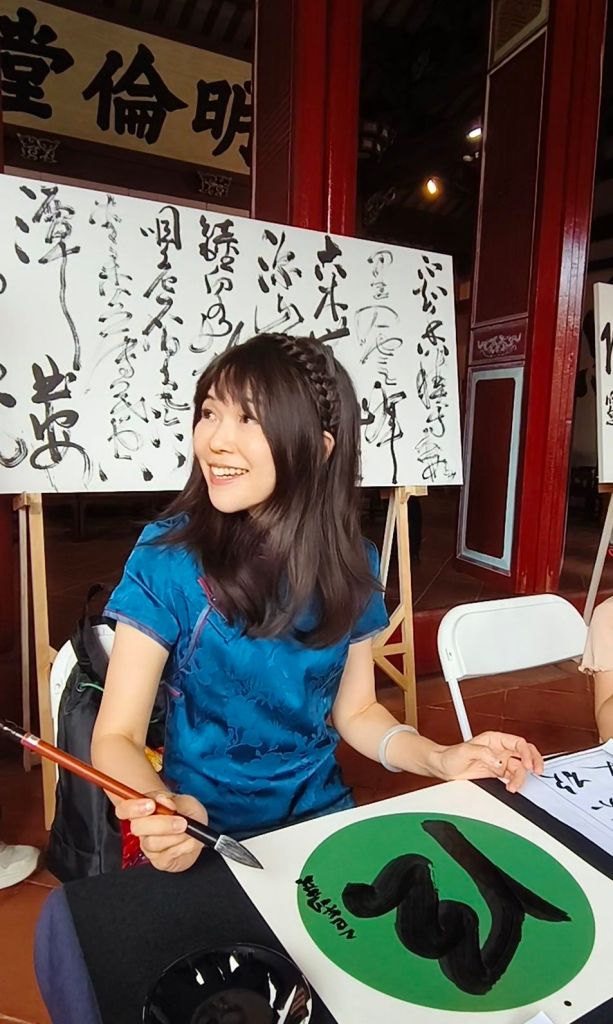
Because seal script carries the rhythm and stillness of history, each stroke arises from the restraint of breath and the calm of the heart. Oil painting is the language of light, where Western romance meets Eastern emptiness. When the pen and the brush converse upon the canvas, Cyn felt a wordless fusion- antiquity awakens within light, and modernity breathes quietly within ink.
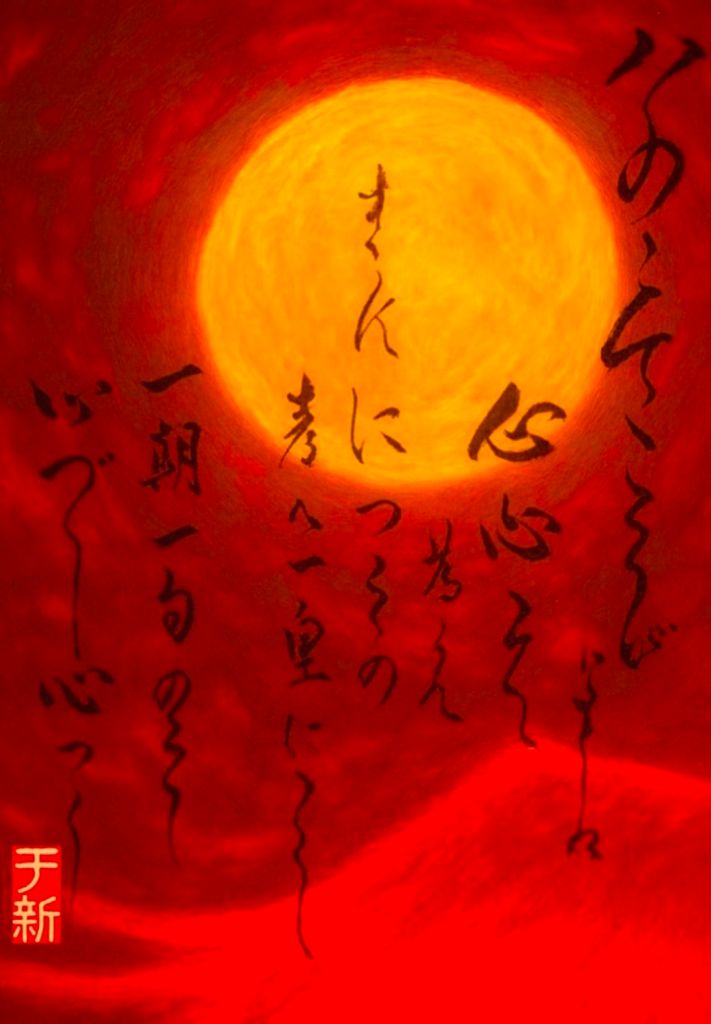
This year’s moon is just such an existence: not the cool silver of autumn skies, but a molten red-gold, as if a heart were kindled in the frozen vastness of the universe.
Its radiance is not gentle — it almost melts the darkness itself, revealing, between light and flame, the ultimate edge of life. Such a moon is “a burning that has reached the depth of stillness,” like the opening line of Snow Country: “After passing through the long tunnel, you arrive at the land of snow.” And here — after traversing the long, crimson dusk — one arrives at the moon of the heart.
The poem inscribed upon the painting is a whisper of the soul:
“To take another’s joy as my own heart, To think and to care with sincerity, In each fleeting encounter, In the homeland of a hundred poems, A flower blooms — wholly from my heart.”
Such words are a soliloquy — reserved, quiet, yet suffused with human warmth. “To take another’s joy as my own heart” is an act of compassion, and a reverence for existence itself. Thus, the moon of Mid-Autumn is not merely a seasonal sign, but the most silent bridge between two hearts.
True beauty is never in outward splendor, but in a moment of eternity — a gaze before vanishing. The poem and the moon share this breath: like an unsent letter — knowing there may be no reply, yet written in the purest tone.
The Red Moon and Emptiness — The Ultimate “Kokorozukushi”
The whole painting is wrapped in deep crimson — the color of blood, and of love. In Buddhist thought, red symbolizes Great Compassion: to burn oneself, to illuminate others. Love in this light always carries a trace of extinction; the flame, seeking life within the moment of its dying.
“Kokorozukushi” — wholehearted devotion — is not worldly romance, but a compassion that transcends the self. Within that red moon, all burning hearts — for love, for vow, for the blossoming of a single flower — willingly surrender to the light.
“This moon does not belong to the heavens, but to the heart.” Its glow is not from without, but from within. It is the artist’s prayer in solitude, the quietest meditation of the Mid-Autumn night.
Between Flame and Silence
“The moon is not in the sky, but in the heart. When it rises, all things fall silent, and only the heart burns.”
Such is this Mid-Autumn moon — suspended in voiceless space, a fire of compassion, a moon born of the heart.
This light does not shine upon the world — it shines upon the soul.
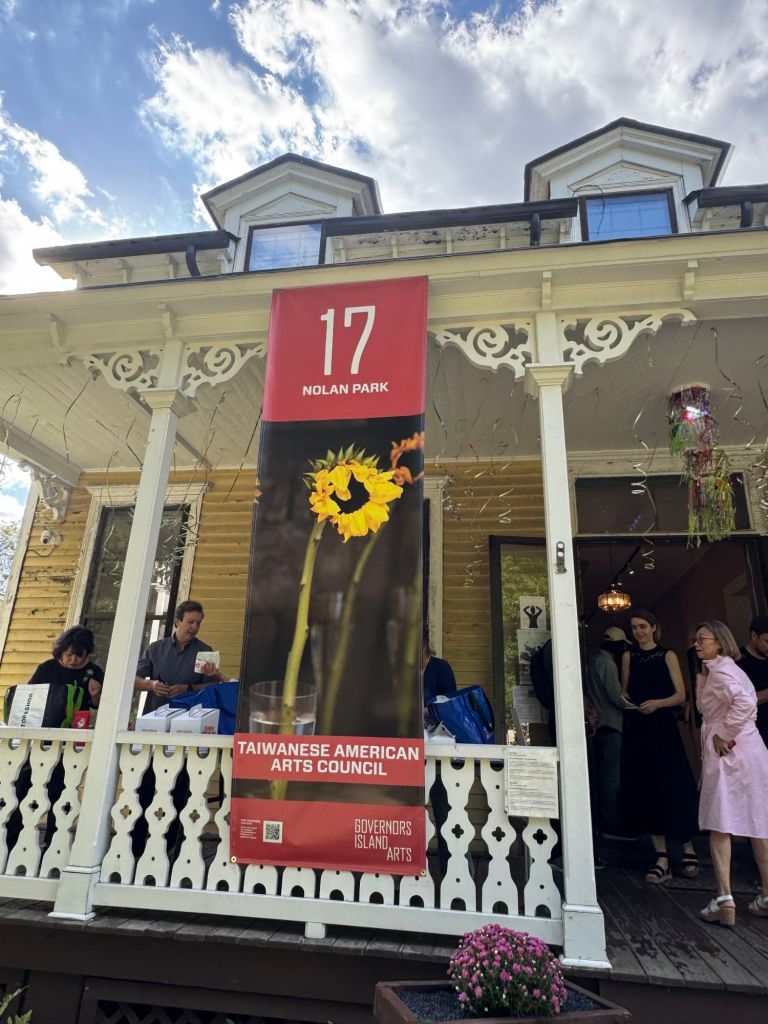
TAAC’s 2025 residency program is now entering the final season of its journey. Since May, it carefully planned step by step, with artists submitting their proposals and now bringing their creations to life upon this island. May art be a bridge, crossing boundaries and languages; may the heart be like water, reflecting beauty, inspiration, and compassion wherever it flows.
It does not need to shout; within the silence of pigments lies its prayer.
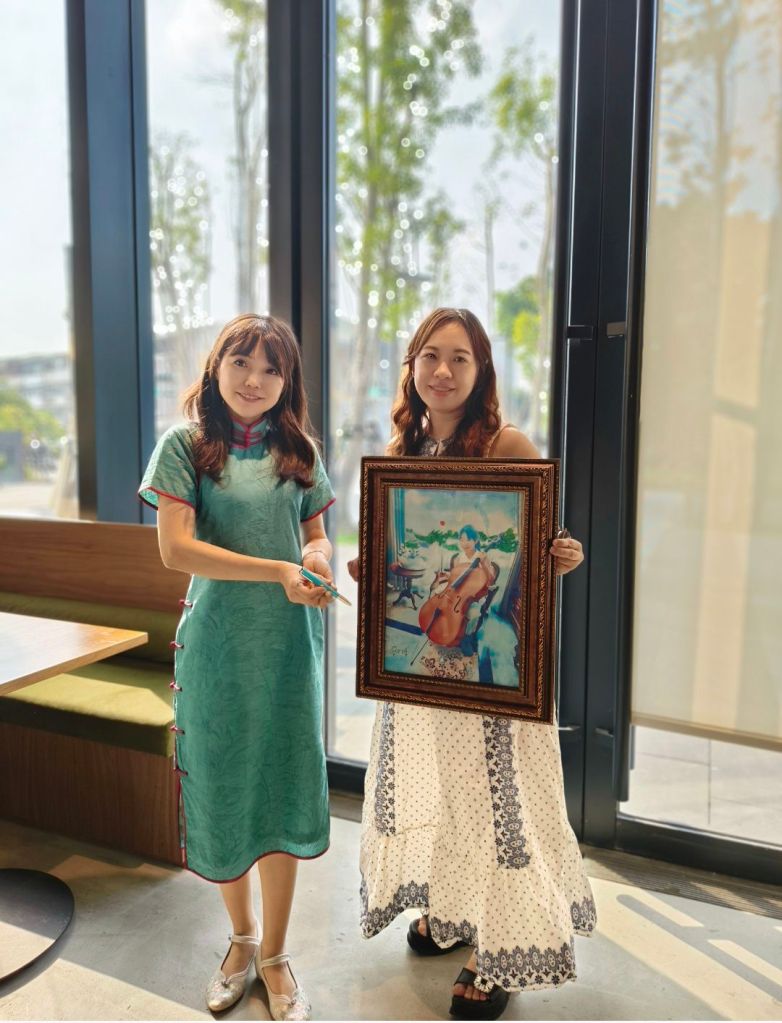
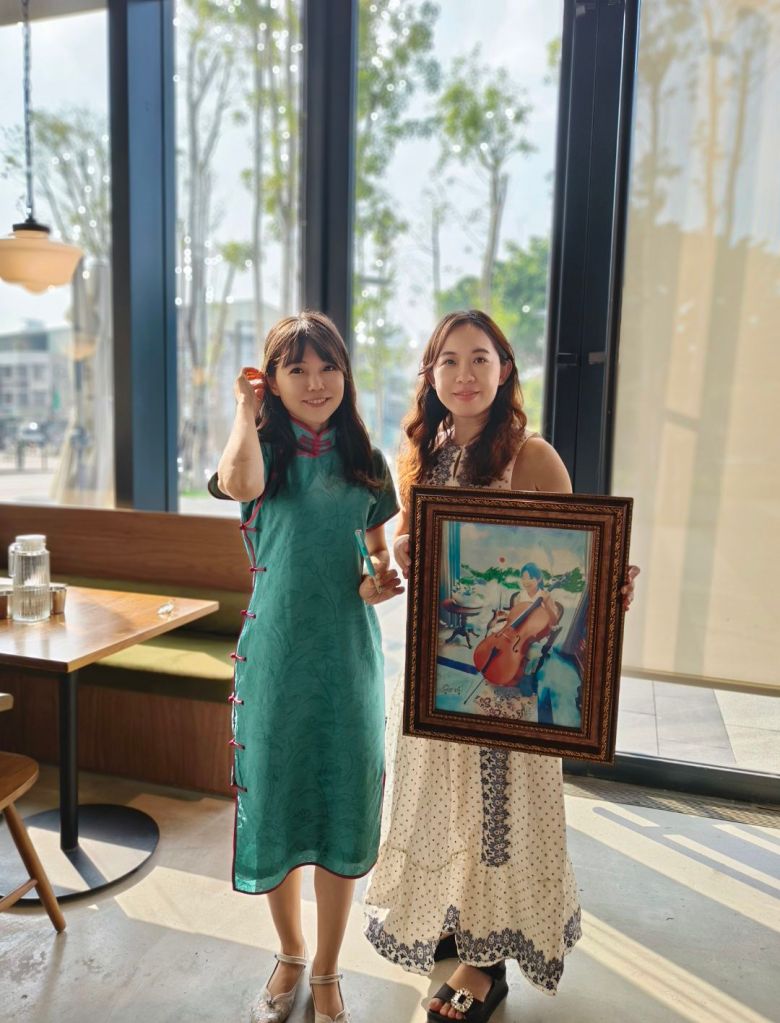
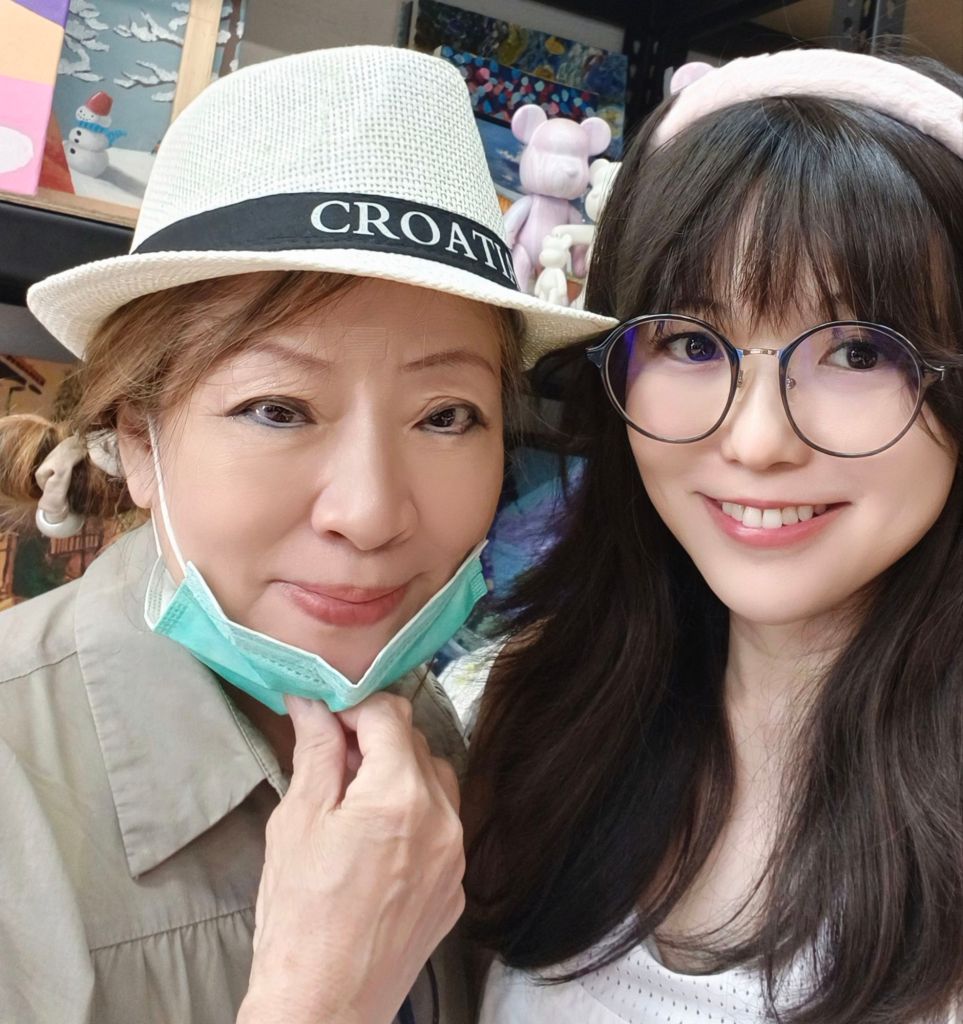
Like Xianglin in Lu Xun’s tale, guarding the creases of ordinary life behind the canvas plain yet weighty. In a portrait with New York–based artist Wu JH, there is light and shadow: one smile luminous, the other gaze contemplative, as though from the pages of a novel.
The paintings behind are an unending play, reminding us what is spoken may not be truth; what remains unsaid often becomes belief.
Mindfulness is this awareness within silence: seeing the breath of color, hearing the stillness of the heart. Between one painting and the next, we rest in the present moment where faith is not a distant light, but existence itself, here and now.
In the state of Oregon, there is a community called Bridge Meadows. At first hearing, it may sound like nothing more than the name of a meadow, yet in truth it takes the shape of home. Here, bloodlines draw no boundary. Elders, foster families, and children who have moved through the foster system are like three branches once standing apart, now stretching and intertwining. No longer just roles, they become supporting limbs, holding up the sky of daily life together.
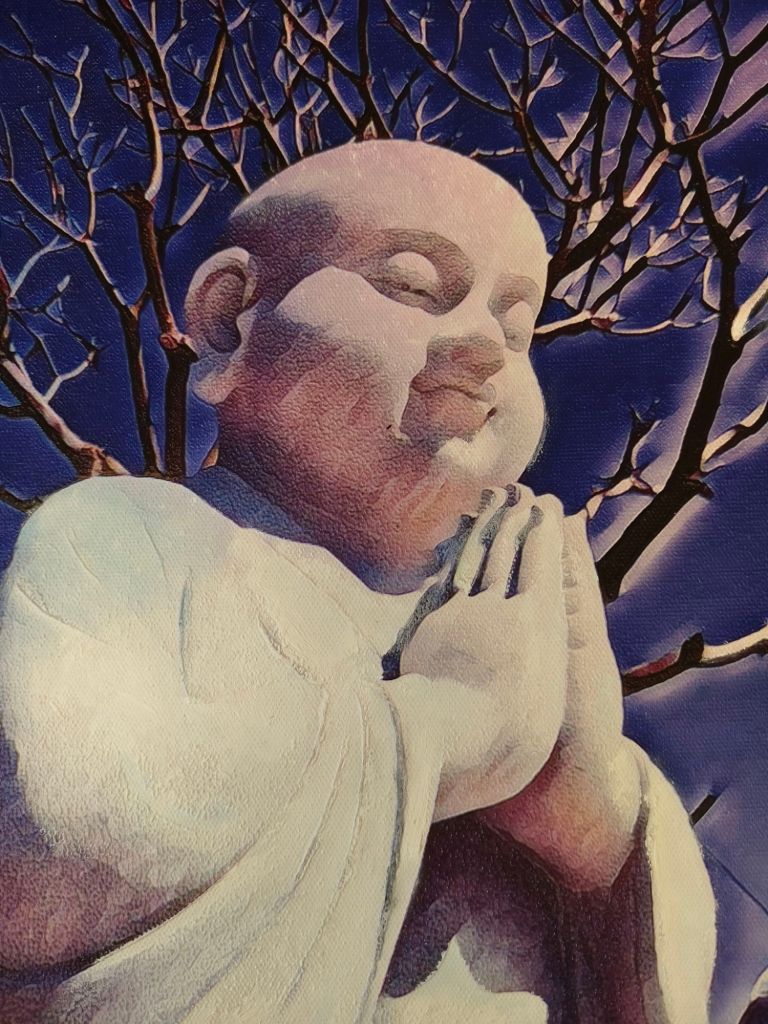
In quiet resonance stands Cyn’s Little Monk, painted in 2025. With palms joined and eyes gently closed, he smiles in serenity. Behind him, branches weave across the deep blue night sky, like a silent guardian. This small figure is more than a religious symbol- it is a reminder of life itself: in a smile lies the power of dwelling in the present; in folded hands, gratitude to the world; in stillness, the teaching that peace of mind is already home.
Bridge Meadows and the Little Monk mirror one another: one is an intergenerational sanctuary, binding isolated branches into a living forest; the other is a gentle presence, placing the heart firmly in the present moment. Together, they whisper softly home need not be sought far away; it is here, in a single breath, in a shared moment of companionship.



 藝術家劉于新