It does not need to shout; within the silence of pigments lies its prayer.
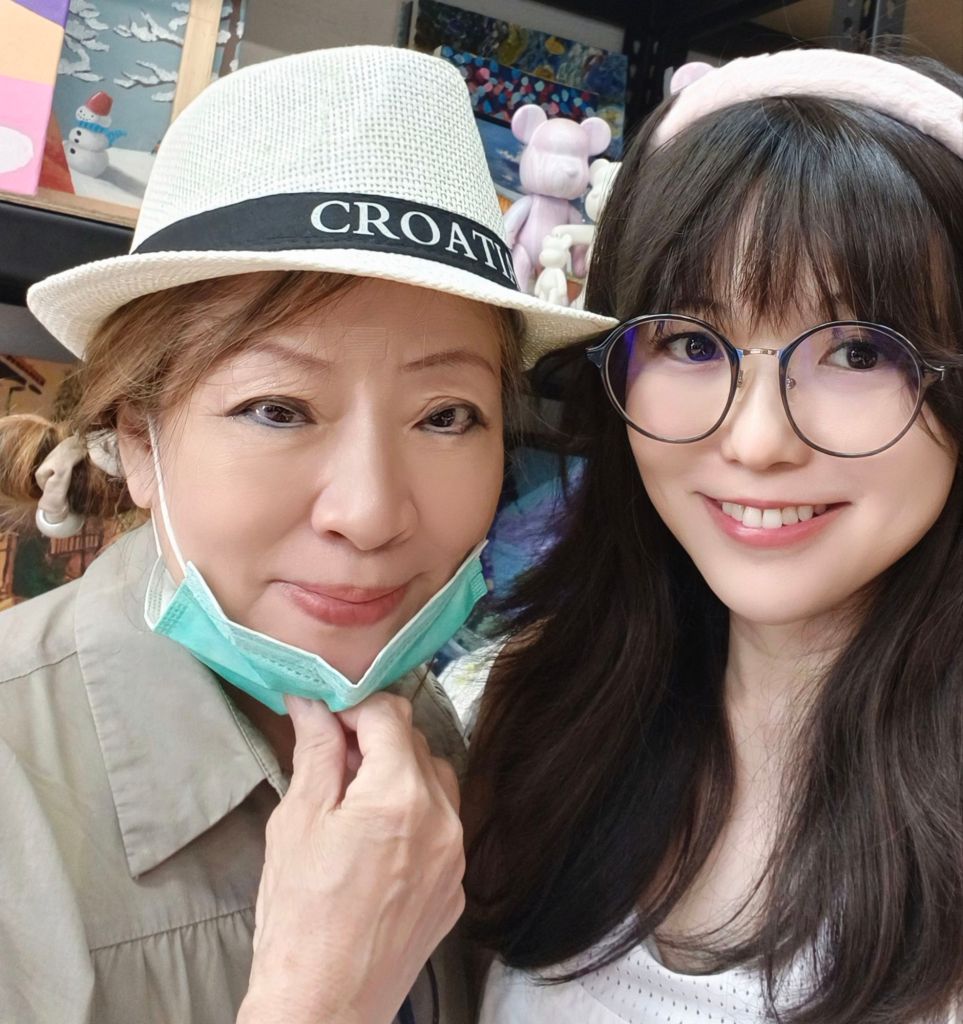
Like Xianglin in Lu Xun’s tale, guarding the creases of ordinary life behind the canvas plain yet weighty. In a portrait with New York–based artist Wu JH, there is light and shadow: one smile luminous, the other gaze contemplative, as though from the pages of a novel.
The paintings behind are an unending play, reminding us what is spoken may not be truth; what remains unsaid often becomes belief.
Mindfulness is this awareness within silence: seeing the breath of color, hearing the stillness of the heart. Between one painting and the next, we rest in the present moment where faith is not a distant light, but existence itself, here and now.
In the state of Oregon, there is a community called Bridge Meadows. At first hearing, it may sound like nothing more than the name of a meadow, yet in truth it takes the shape of home. Here, bloodlines draw no boundary. Elders, foster families, and children who have moved through the foster system are like three branches once standing apart, now stretching and intertwining. No longer just roles, they become supporting limbs, holding up the sky of daily life together.
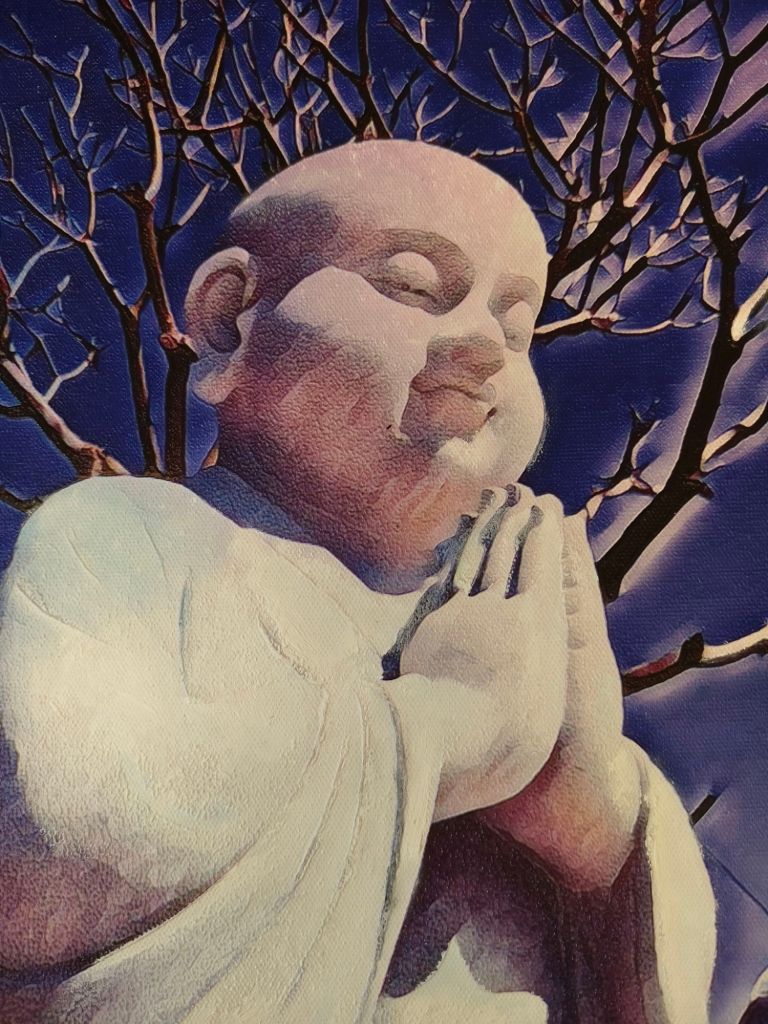
In quiet resonance stands Cyn’s Little Monk, painted in 2025. With palms joined and eyes gently closed, he smiles in serenity. Behind him, branches weave across the deep blue night sky, like a silent guardian. This small figure is more than a religious symbol- it is a reminder of life itself: in a smile lies the power of dwelling in the present; in folded hands, gratitude to the world; in stillness, the teaching that peace of mind is already home.
Bridge Meadows and the Little Monk mirror one another: one is an intergenerational sanctuary, binding isolated branches into a living forest; the other is a gentle presence, placing the heart firmly in the present moment. Together, they whisper softly home need not be sought far away; it is here, in a single breath, in a shared moment of companionship.
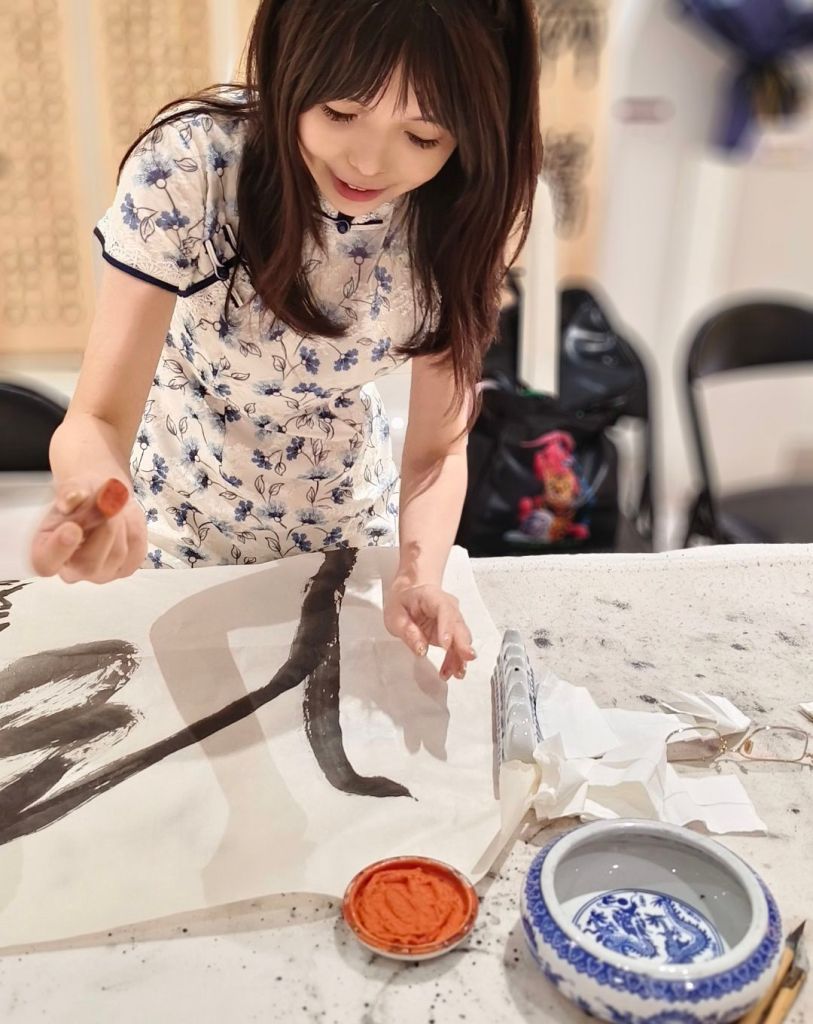
Recently, guided by a subtle turn of fate, I stepped into the world of calligraphy. The flow of brush and ink feels like a quiet meditation; each stroke is an extension of the heart. Life, I realize, is just like this within what seems accidental, we are constantly reminded that learning never ends, and growth knows no boundary.
Mindfulness teaches us that every stroke, whether rounded or rough, is part of life itself. When the heart dwells at the tip of the brush, the spirit finds its freedom. Thus I understand: entering the realm of calligraphy is not only the study of an art, but also a repeated contemplation of life, and an expression of gratitude.
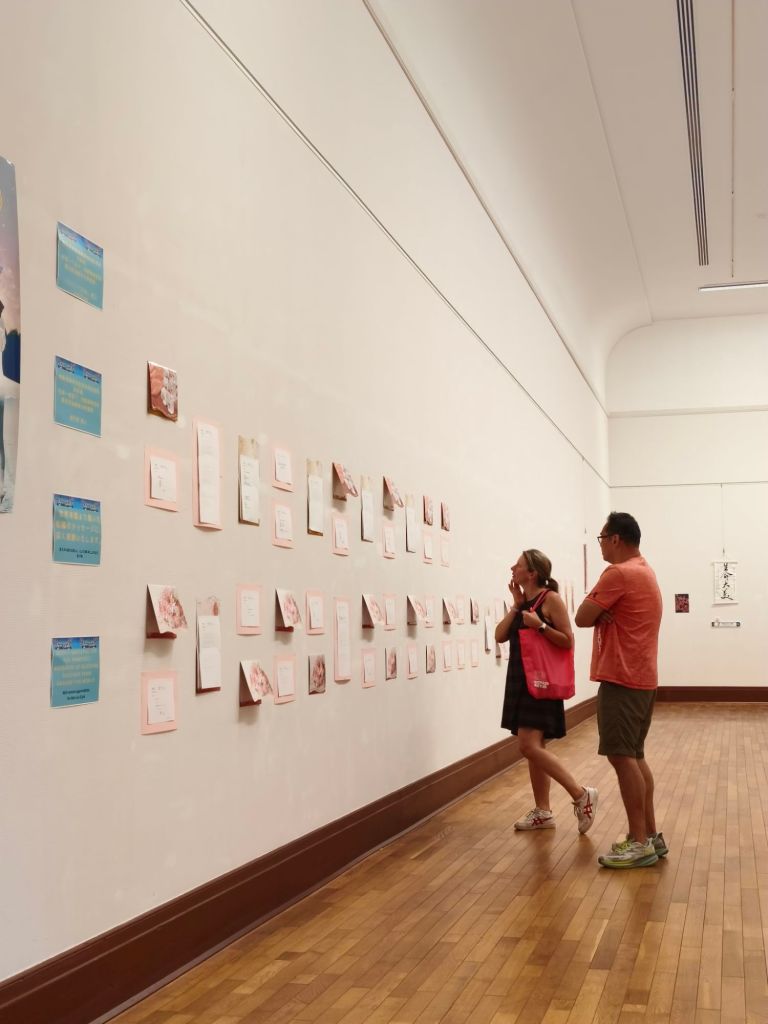
At the exhibition in Japan, many told me that seeing a wall filled with congratulatory messages is truly rare and precious. Since flowers were not allowed, friends sent words instead like bouquets of the heart. These messages quietly illuminated the hall and warmed my soul.
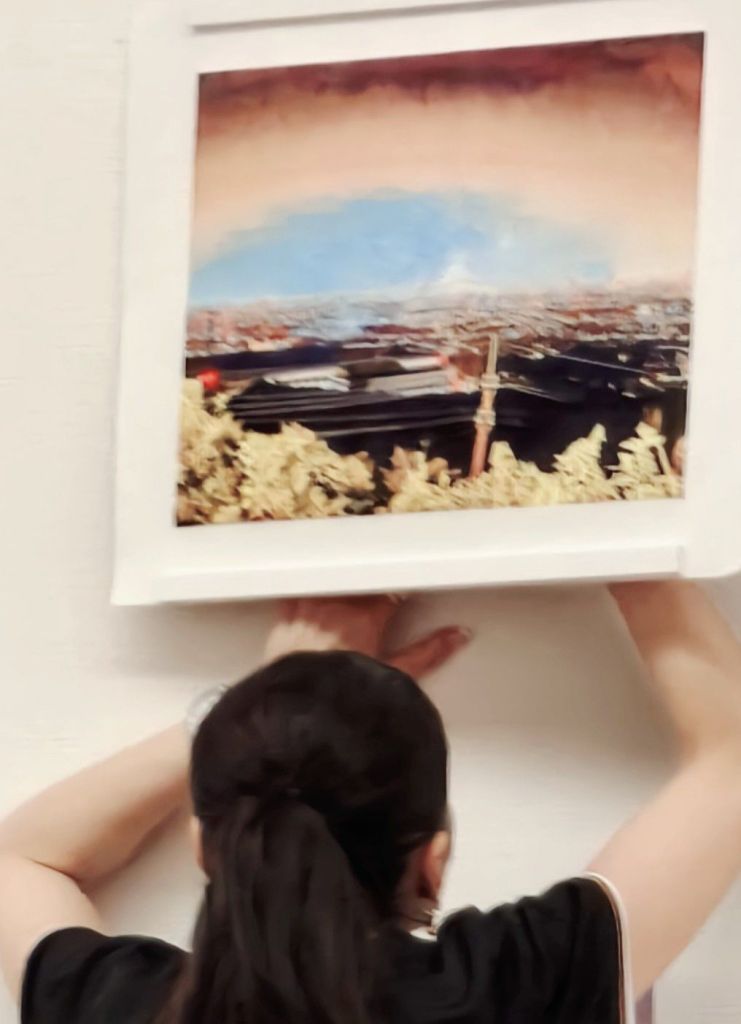
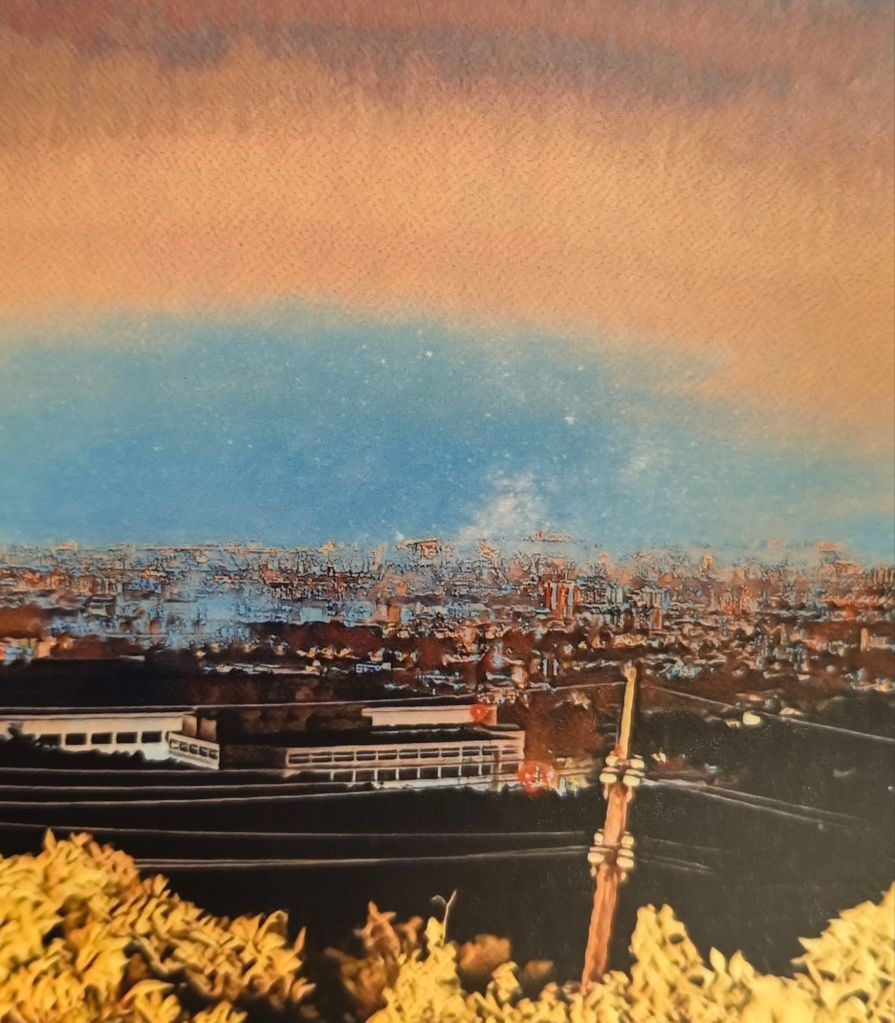
There is a quietness in Taoyuan’s night. After a day of rush and noise, the city is gently veiled in light. Between rooftops, lamps flicker; distant mountains fade into shadow; the sky melts from blue into crimson, like a painting needing no title.
The wind passes through the streets, carrying away the day’s haste, leaving behind only peace of mind. Night is not the leftover of day, but another kind of wholeness. In its stillness, we find an invisible shelter for the heart.
Each artwork hung on the wall is not just displayed, but carefully placed with intention— so it may find its home, both on the wall and in the viewer’s heart.
桃園の灯火(とうえんのともしび)
齊魯工業大學藝術設計學院的林川云教授,在京都市京瓷美術館欣賞這幅作品時,特別讚歎其細節的處理十分細膩、用心。教授提到,畫面中的光影層次與城市景觀的描繪,不僅展現了創作者對色彩與質感的敏銳把握,也傳遞出一種靜謐而深遠的情感。這樣的細節經營,使觀者在凝視時,能夠感受到作品背後蘊藏的心力與真誠。 Professor Lin Chuanyun from the School of Art and Design, Qilu University of Technology, admired this painting at the Kyoto City Kyocera Museum of Art. He especially praised the delicate and attentive treatment of details. He noted that the layered light and the depiction of the cityscape not only reveal the artist’s sensitivity to color and texture, but also convey a serene and profound emotion. Such careful craftsmanship allows viewers to feel the sincerity and dedication behind the work.
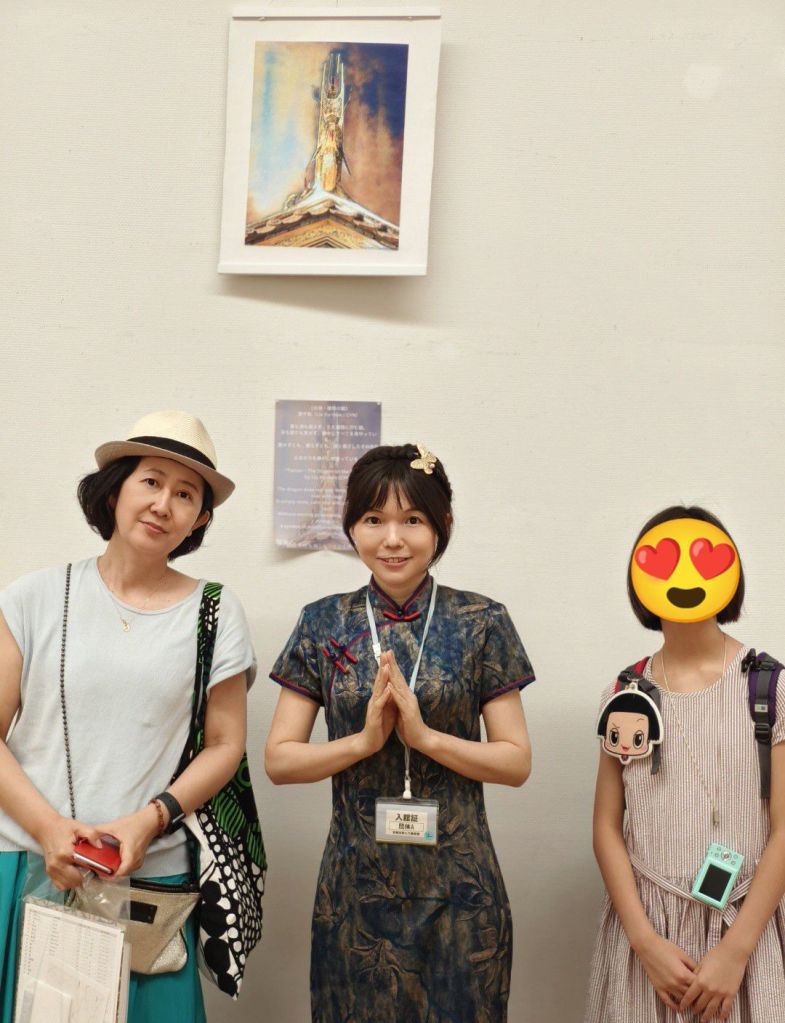
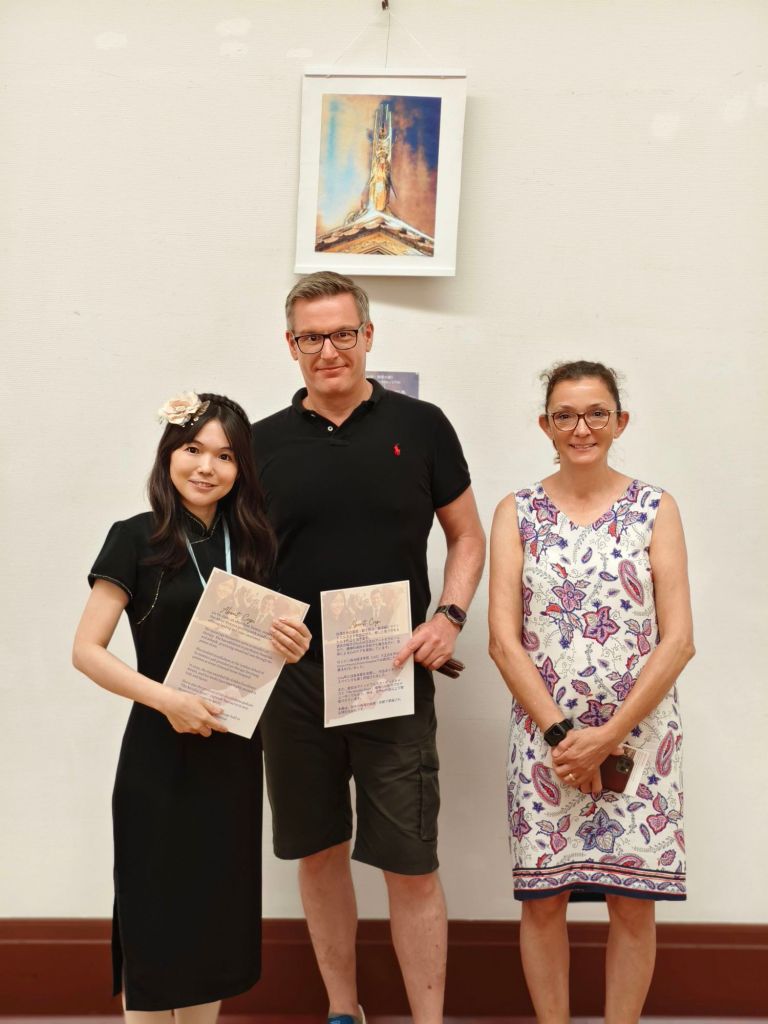
お母様がご子息をお連れになり、わざわざご支援にお越しくださいました。ein Ehepaar von Psychologen aus Hamburg
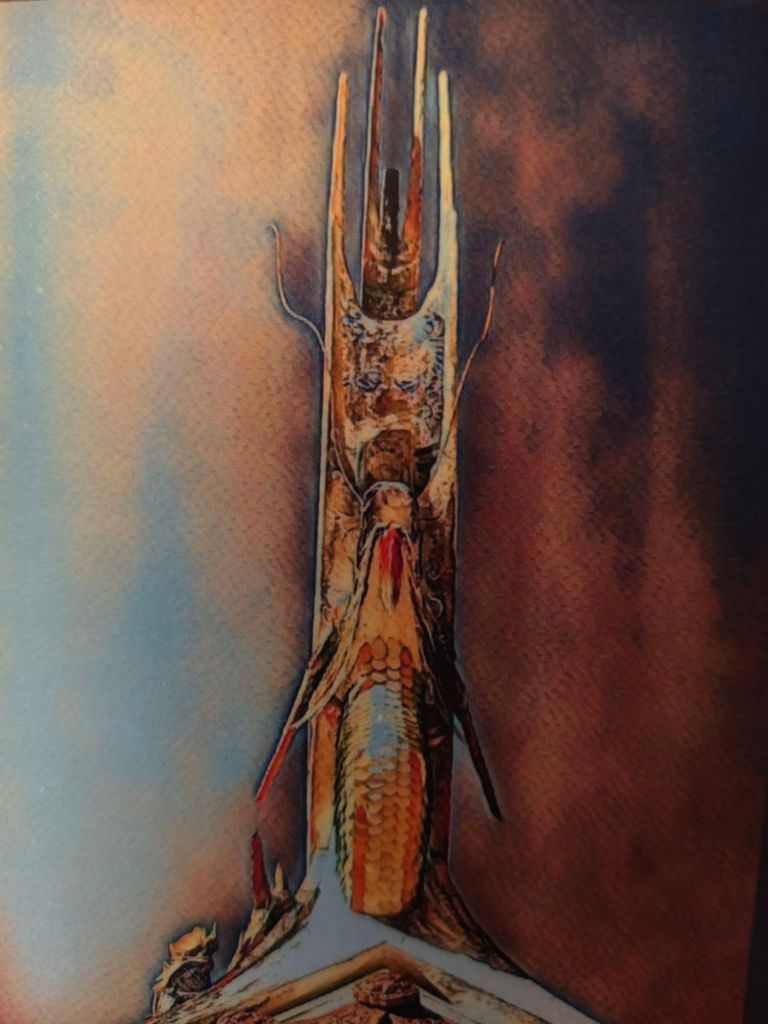
Das Dach des Drachen
In den japanischen Burgen wacht der Shachihoko, in Taiwan hingegen der Drache.
Der Shachihoko, mit Tigerkopf und Fischschwanz, gilt als mythisches Wesen gegen Feuer und Unheil. Auf der Burg Himeji sind alle Shachihoko weiblich – Nachbildungen der einzig erhaltenen Formen aus der großen Restaurierung der Shōwa-Zeit. So wird die Burg von „Mutter-Shachihoko“ beschützt, die Stärke und Sanftmut zugleich verkörpern.
In Taiwan steigen die Drachen zum Himmel empor, als Sinnbild von Glück, Schutz und Wohlstand. Dieses Bild „Dach des Drachen“ berührt nicht nur Gelehrte, sondern auch Kinder – über Kulturen und Generationen hinweg.
Wahrer Schutz liegt nicht nur in Macht und Stärke, sondern auch in mütterlicher Sanftheit und in der stillen Präsenz eines Drachen.
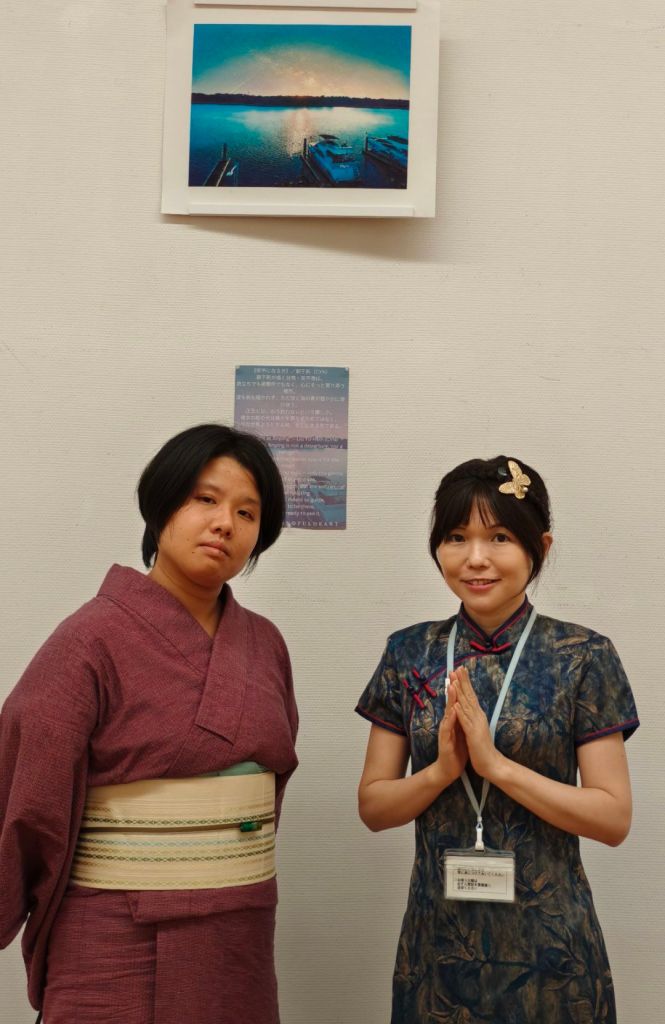
A young girl from Kyoto, before leaving, softly said to me in Japanese: “You are surely someone who is loved by all.”
At that very moment, behind us hung the painting The Light of Anping. This work captures the glow of the sunset over Anping Harbor. The water shining like a mirror, the boats quietly returning home. The light is not a dazzling brilliance, but a gentle radiance, like the breath of time, like the stillness of the heart.
True light is not the glitter that dazzles outwardly, but the kind that penetrates the heart, bringing with it a warmth and tenderness. A single word spoken in the moment, a single beam of light before our eyes— these are already proofs of wholeness.
Her words and that light resonated together.Light brings silence to the world; Words allow the soul to be seen. And to love, and to be loved, is the purest illumination between human hearts.
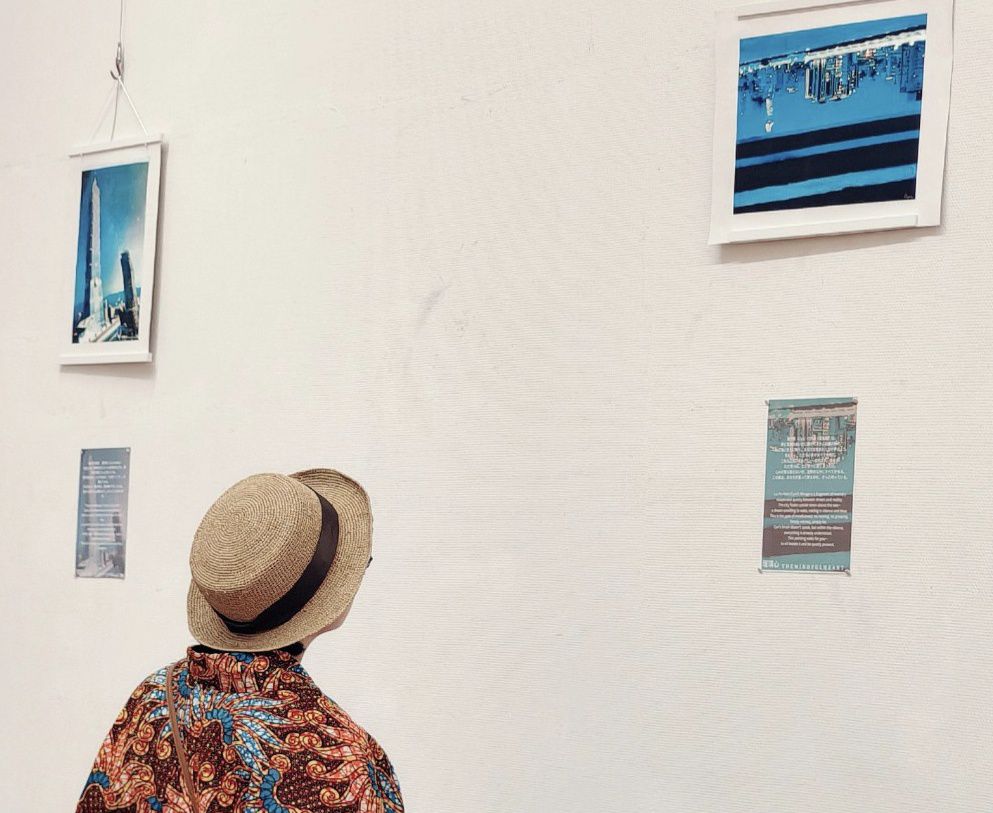
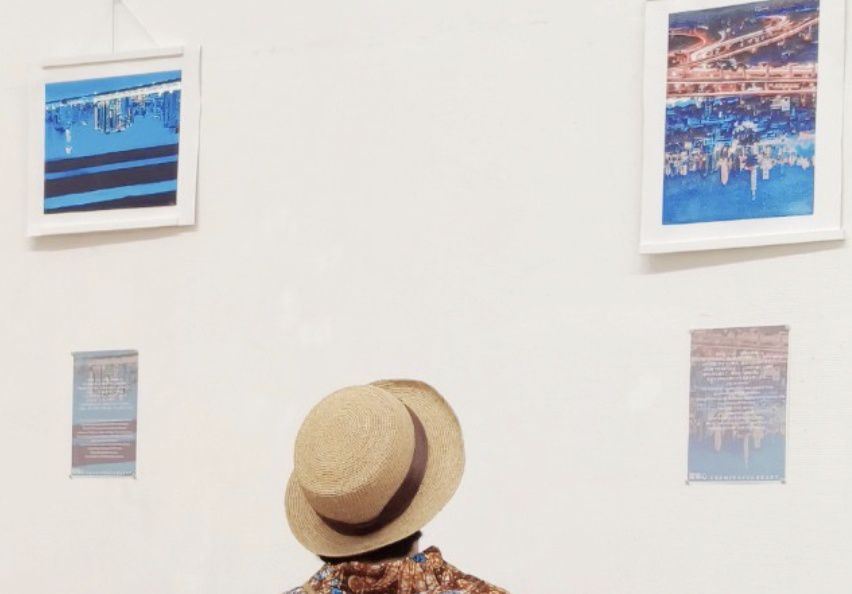
In the Taipei Series, I chose to portray the city as a mirage. The skyscrapers of Taipei, interwoven with light and shadow, are reflected upon the water’s surface, where the boundary between reality and dream seems to dissolve.
Many Japanese friends who have visited Taipei stood before the painting and softly remarked that this way of expression was “full of imagination.”
Indeed, the city itself is like a mirage: at once real and illusory; seemingly within reach, yet somehow distant.
What we see is nothing more than a reflection of our state of mind. The height of the buildings is not in the sky, but in the heart’s own ascent. The reflection in the water is not an illusion, but another form of truth.
When gazing upon this work, the world grows still, and so does the heart. Art, then, is not merely the reproduction of scenery, but a guide that leads us to discover the resting place of the heart, between prosperity and illusion. 在「台北系列」中,選擇以海市蜃樓來呈現。台北的摩天大樓與光影交織,倒映於水面之中,現實與夢境的邊界在此交融。
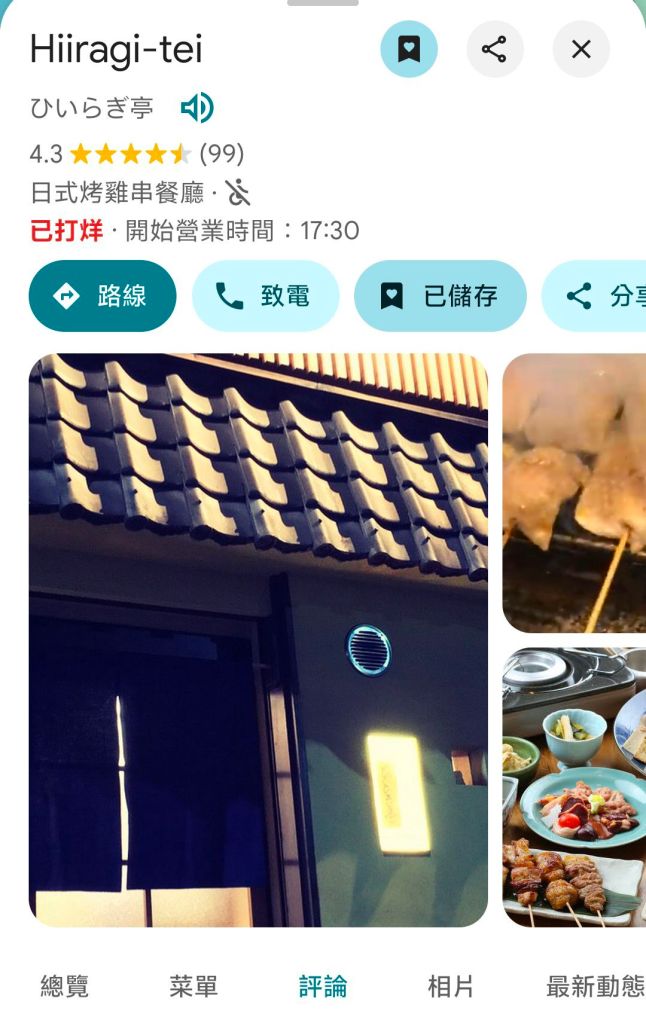
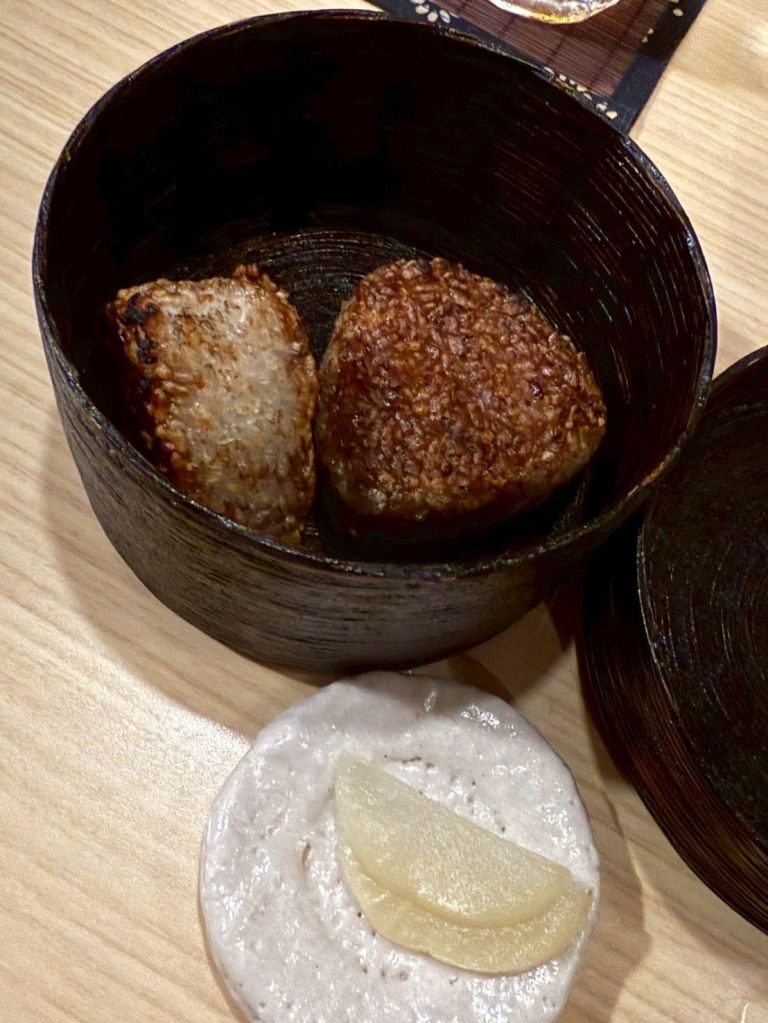
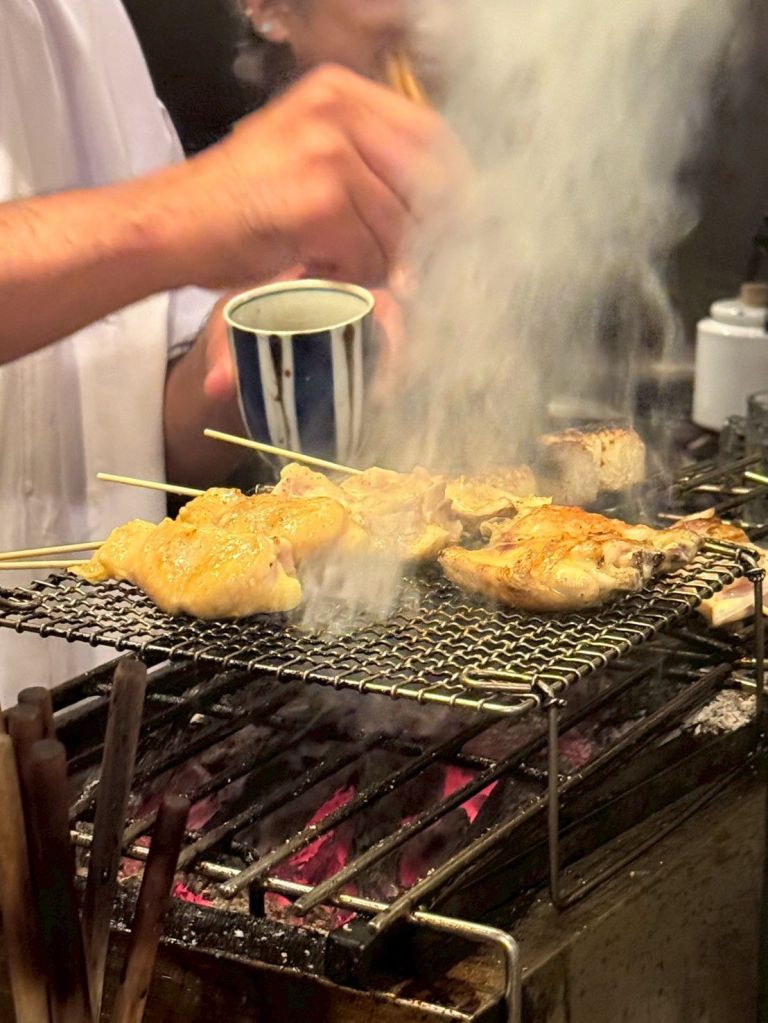
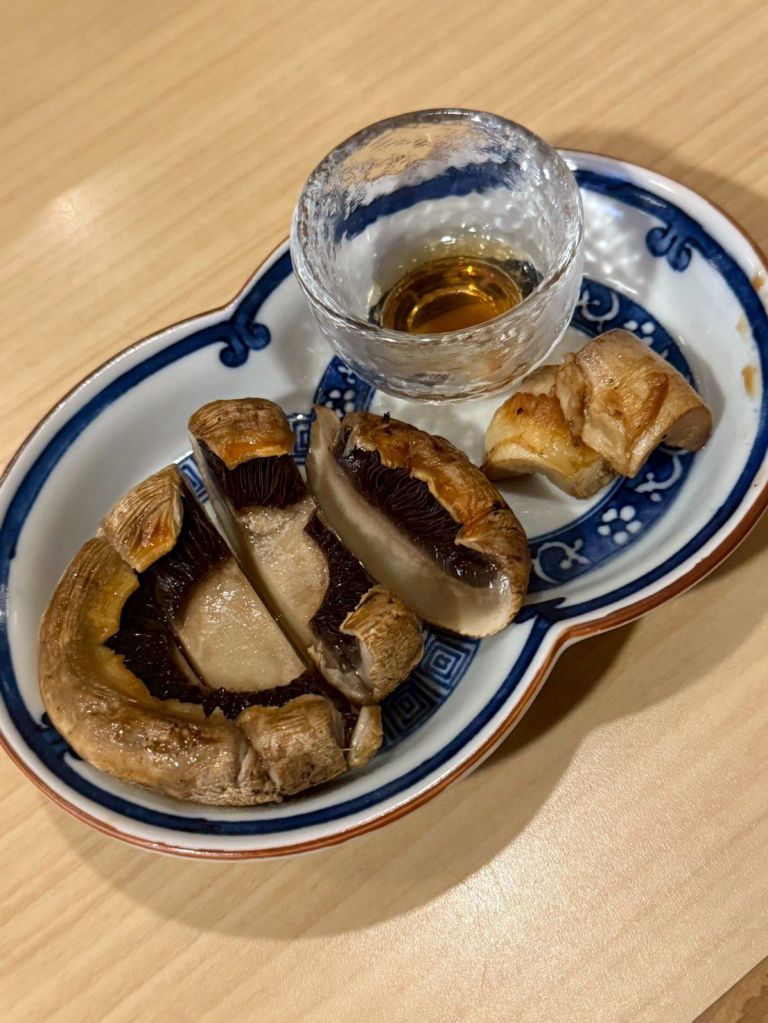
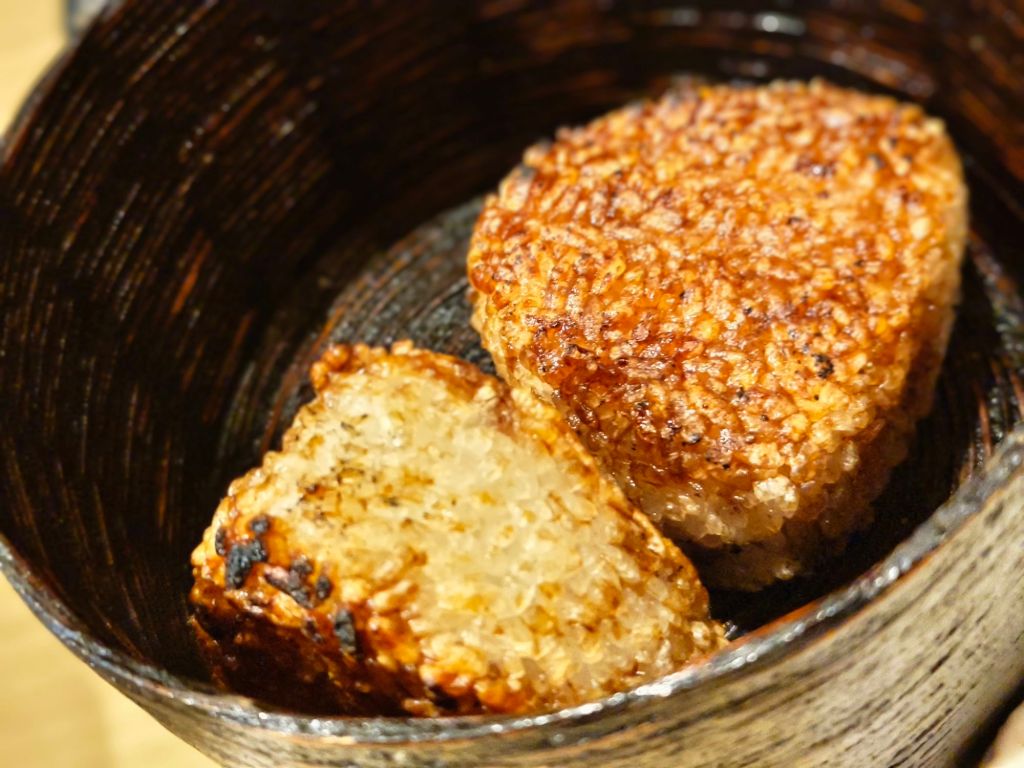
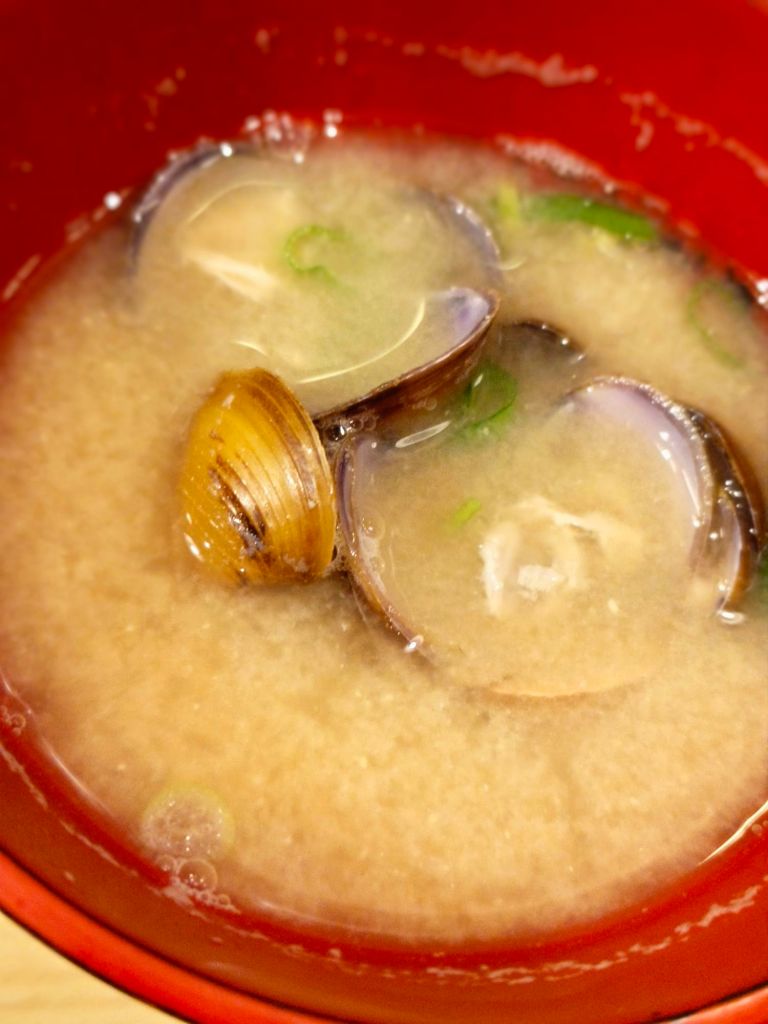
幸福從來不是追逐而得,而是在用心之中自然流露。當我們安住於當下,就會發現,這一晚的每一刻,都已是最圓滿的永恆。 I don’t usually care much about food, yet this Michelin dining lingered in both taste and heart — no wonder Kyoto calls it the best. What touched me most was the owner and staff’s heartfelt support for our art, even noticing the clothes I designed for the exhibition. After The Beauty of Sentient Life concluded at the Kyocera Museum, we celebrated here. Light, flavor, and laughter intertwined — not just festivity, but quiet completeness. Happiness is not chased, but found in the mindful present, where each moment is already eternity. 私は普段あまり食にこだわらないのですが、このミシュランの料理の繊細さは、心にいつまでも残りました。味わいは舌の上にとどまるだけでなく、心の奥深くにやさしく響きます。京都の人々が「一番」と口々に称えるのも不思議ではありません――それは単なる味覚ではなく、一つの境地なのです。




 藝術家劉于新