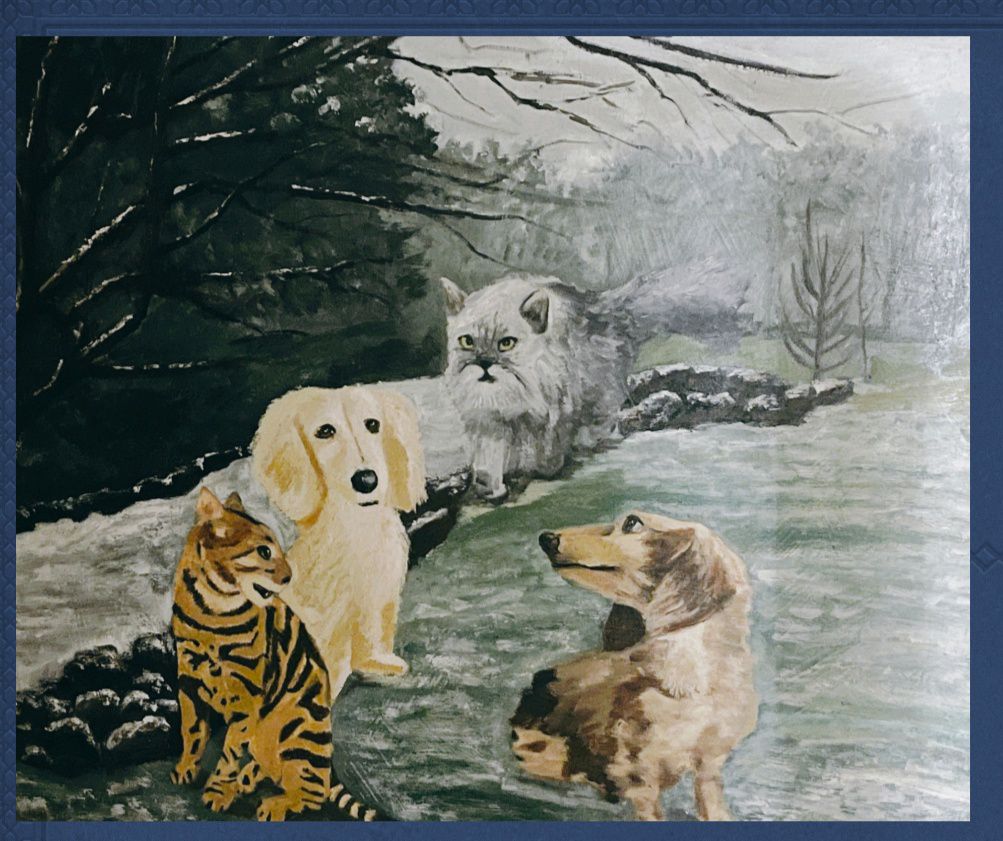
——きっと彼女が天界から歩み寄り、 かつてと同じまなざしで、 そっと私の心に触れているのだ、と。 The cat in the portrait Maomao has long returned to her home in heaven, yet every time I see her image, it feels as if a soft breeze brushes through my heart. It is the warmth of remembering what it once felt like to be loved.
A week before Maomao passed, I was still childish enough to half-joke, half-plead with her: “Don’t die at home and scare me, okay? I’m afraid.” Back then it just felt silly; now I realize it was life’s final exchange. I was afraid of being frightened, and she, in her gentle way, honored that. The day she stopped eating and drinking, I carried her to the hospital, and she slipped away quietly that very day as if she chose the gentlest departure so I wouldn’t suffer.
I didn’t know then that animals also arrange a less painful farewell for the ones they love.
Later, I had a dream so vivid it didn’t feel like a dream at all, but a message from another realm. I was driving when I saw Maomao walking along the animal realm with many other cats and dogs. Her fur still shone; her posture was graceful, just as before. I called out to her, calling until my soul felt like it was tearing: “Come home with me.”
But she did not turn back. She didn’t seem to recognize me. She simply kept walking, quietly, steadily.
In that moment, I cried as if the whole world had shattered.
When I woke up, I thought about it for a long time.
Maybe she didn’t fail to recognize me maybe her life had moved on to another path, one she had to walk, one that belongs to her next journey. Our bond in this lifetime had already come full circle, like a flower that had blossomed completely; there was no need for it to return.
Mindfulness teaches us this: All beings have their own destination. Every encounter has its cause. Loss is not something stolen from us it is life continuing in another form.
So I learned to place her gently within my breath. Inhaling, I remember the joy she brought me. Exhaling, I release the grief I had held too tightly.
Though Maomao no longer comes home, each time my heart softens, even just a little, I know it must be her, walking from heaven back to me, touching my heart softly, just as she once did with her eyes.
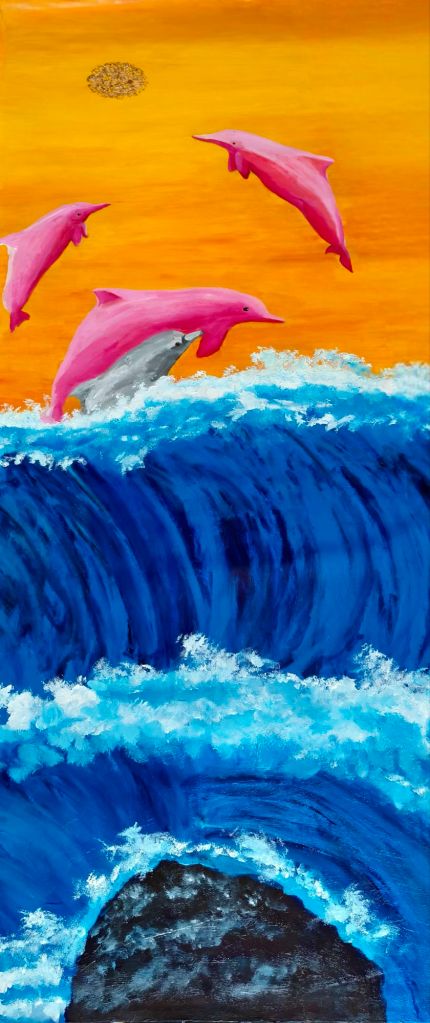
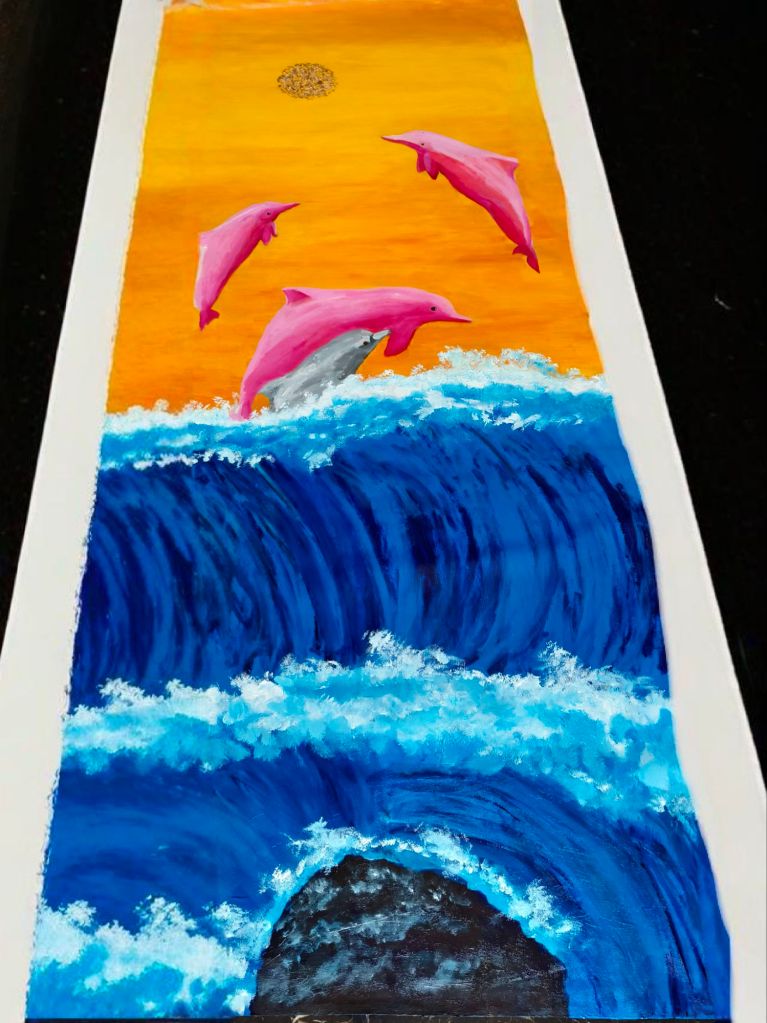
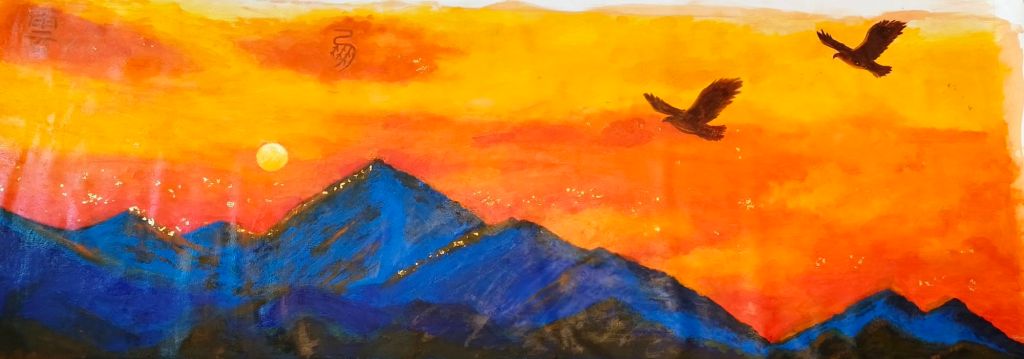
The pink dolphins leaping above the sea look like a fairy tale, yet they are a reminder—a quiet wish rising from our island’s ocean. Known as Mazu’s fish, the Taiwanese Humpback Dolphin is unique to Taiwan. Its pink color isn’t decoration, but life itself: when it swims and breathes, blood flows faster and tiny vessels bloom into a translucent rose.
These dolphins live along Taiwan’s western coast, but are now Critically Endangered (CR) under the IUCN. Their fragility awakens the tenderness we often forget.
Perhaps that is why they shine so brightly here—lifting a hope we nearly lost: May the ocean remain safe, and may life continue.
The gold-leaf sun above is quiet and weighty, like a cherished piece of jewelry left in the sky. Its light falls softly on the dolphins, as if knowing that these lives, seeking light, are more precious than gold.
Even the smallest love, when seen, becomes a blessing.
Oil Painting — Ocean of Radiant Gold: Mazu Dolphins over the Noble Rock 180 cm × 72 cm 油畫-滄海璀日媽祖魚耀貴岩180cmx72cm
I listened to Master Architect Ooi Bok-kim speak about the restoration of historic buildings in George Town, Penang. That city, brushed for decades by the sea wind, wears its mottled walls not as decay but as a duet between salt and time. Those tiny white crystals, barely visible, are like a soft sigh breathed out from deep within the walls of history.
Penang is an island city where sea, history, spices, and culture resonate together- a canvas washed over again and again by the tides. The sea there is never a single shade of blue; it shifts between mist-like gray, warm green, and deep indigo—tones layered by time across the water’s surface. Along the coastline, fish farms and farmlands lie in neat grids, like pages of a notebook the earth keeps, recording the daily negotiations between human life, water, and the tidal world. The hills are not tall, yet they guard quiet stories; rooftops scatter loosely, bearing a southern ease. Even through the glass, the sea wind arrives with a moist contour one can almost touch.
UNESCO World Heritage: George Town
Declared a UNESCO World Heritage Site in 2008 for its multi-cultural urban fabric-shophouses, mosques, temples, and churches standing side by side-George Town feels like an alleyway of time. Cracks on the walls, fading tiles, old window grilles-each tells a piece of history never written in textbooks.
The sea wind raised this city, and it also erodes it. Salt, humidity, and time do not merely write Penang; they also slowly consume it. This is why we study salt damage, materials, restoration, and preservation.
Penang is both the child of the sea wind and forever held in its arms. It is the tenderness of the ocean and the depth of history, waking slowly together under tropical sunlight.
Restoration, when stripped of technical terms, is simply an act of gentleness much like looking at a Buddha statue: you must understand its beauty, but also its fragility; you want it to shine, but never at the cost of losing its original soul.
Then came Architect Ho Weng Hin from Singapore,
Chair of Docomomo Singapore, Vice Chair of ICOMOS ISC20C (“the international committee dedicated to 20th-century heritage”), and Adjunct Associate Professor at NUS College- a man who moves effortlessly between hands-on conservation, international heritage frameworks, and academic theory.
Through a series of Singaporean case studies, he spoke in detail about research on salt deterioration in historic buildings. Many of the buildings he mentioned made me want to fly to Singapore just to see them- not for the techniques alone, but for a way of facing time, meeting damage, and meeting ourselves. Watching these buildings’ destinies felt uncannily like watching human fate.
Restoration is the act of mending a tear in time.
A heritage building, once old, ages with brutal honesty. Peeling plaster, white deposits seeping from brick joints- they resemble the backs of aging hands, where veins and lines can no longer be concealed.
What Architect Ho does is simply to make time look a little more presentable- to ensure that the wounds of the years are not too stark, not too exposed.
The Cathedral of the Good Shepherd –
A white of faith, older than time
The spire pierces the sky; the white walls stand in a silence that seems to guard century-old prayers. Time is lenient toward faith what it wears away is the wall, not the belief.
During restoration, workers patched lime mortar under the sunlight, like nuns quietly smoothing their habits wordless, precise, and full of respect.
Sun Yat Sen Nanyang Memorial Hall
Where the shadow of revolution still lingers
The 1902 villa stands with walls so white they look like the last glow history wished to preserve. The footsteps of the 1911 Revolution have long faded, yet they still stir faintly in the corridor winds, yellowed slightly by the tropical sun. Restoration does not return youth; it simply allows a house to keep holding up an umbrella for its memories.
Raffles Hotel
A whiteness almost aristocratic The white of Raffles is not ordinary white- it is the kind of white one hesitates to approach. Like a woman in a cheongsam sitting in the afternoon light, her poised stillness revealing the delicate bones beneath.
Architects quietly repair what the sea wind has tired, covering the fatigue without erasing the dignity- preserving that slight, aloof elegance untouched by the world.
The Arts and Crafts Bungalow
The silence of 1926 Red bricks reveal their true color again after layers of paint are removed, like a person finally taking off makeup worn for too many years- pale, uneasy, but so real it moves the heart.
Craftsmen restore the mortar gently, stitching the house’s edges like sewing an elderly person’s clothing not seeking grandeur, just decency.
Colonial Service Quarters (1910–1920) A house with a past life
The house stands atop its modest hill 42 meters is not impressive, yet enough for it to gaze upon the winds and the world. High places carry unspoken hierarchies; so do the homes built there. These were never mere residences, but screens behind which power cast its shadow.
The white walls are worn, the windows impeccably English. Large openings stand like a posture ventilation, yes, but also propriety. This was the language of the 1910s and 1920s: British aesthetics learning to loosen their collar in the tropics.
Inside, patches of efflorescence scatter across the tiles- at first glance like careless housekeeping; on closer look like an old man’s whitening temples, growing upward from the earth itself.
This is the story of rising damp: water creeping silently into the walls, evaporating and leaving grains of salt- time scattering its pale powder across the house.
The wooden trusses, weathered by humidity and years, are as fragile as the edges of an old love letter. Termite bites do not announce themselves, yet they speak quietly of structural fatigue. Non-destructive testing-infrared, sonic readings becomes a kind of auscultation, an architect listening to an old building’s heartbeat.
Restoration is not reinvention. It is conversation. You ask: What happened to you? You listen: How have you lived?
Studio Lapis works with restraint: keeping beams that can be kept, saving tiles that can be saved. Replacements are done with materials close in age and nature like fitting an elderly person with a missing tooth, so they may still recognize themselves in the mirror.
Lime plaster lets the walls breathe. Repairs to flooring and tiles hide themselves quietly. Structural reinforcement remains invisible like a heart stent placed beneath familiar clothes.
Most enchanting is the long white corridor: light falling through the louvered windows like a morning lost from an old photograph. Walk through it and you almost hear heels from the past, voices in forgotten languages, or the soft murmur of wind brushing treetops.
Restoration is not erasure of time; it is teaching people how to read it.
Salt blooms, dampness, abrasion, fragility-none are flaws, but the true face of a house that has weathered monsoons for a century.
All we can do is help it stand a little longer, a little more gracefully, and let it be seen breathing, aging, and still alive.
Some wounds come from storms; some from love that was too forceful. What Architect Ho does is simply help these buildings remain upright in the wind, with dignity.
Because heritage, like people, only grows more desolate when its scars are concealed. To acknowledge them, tend to them, accompany them that is what makes restoration whole.
Non-destructive testing can see only part of the truth;
Only invasive methods reveal the whole story. It sounds like a lesson in architecture, yet it is equally a lesson of the heart. Some cracks cannot be seen just because we wish to see them. The wounds of a building are not always on the surface; sometimes they hide in the salt those pale crystals seeping outward like the tears of time, returning grain by grain to the depths of history.
To restore a building as national heritage is not merely to recover its form but to return its soul. After class, I asked Architect Ho about maintaining marble floors. He answered gently, “If you wash marble with water, it will discolor.”
The sentence was plain, yet it felt like a quiet admonition for life.
In mindfulness we learn: The more desperately we scrub something in pursuit of purity, the easier it is to destroy its light. The more anxiously we try to fix a wound, the deeper it may fracture. Only by seeing, allowing, and accompanying can true restoration happen.
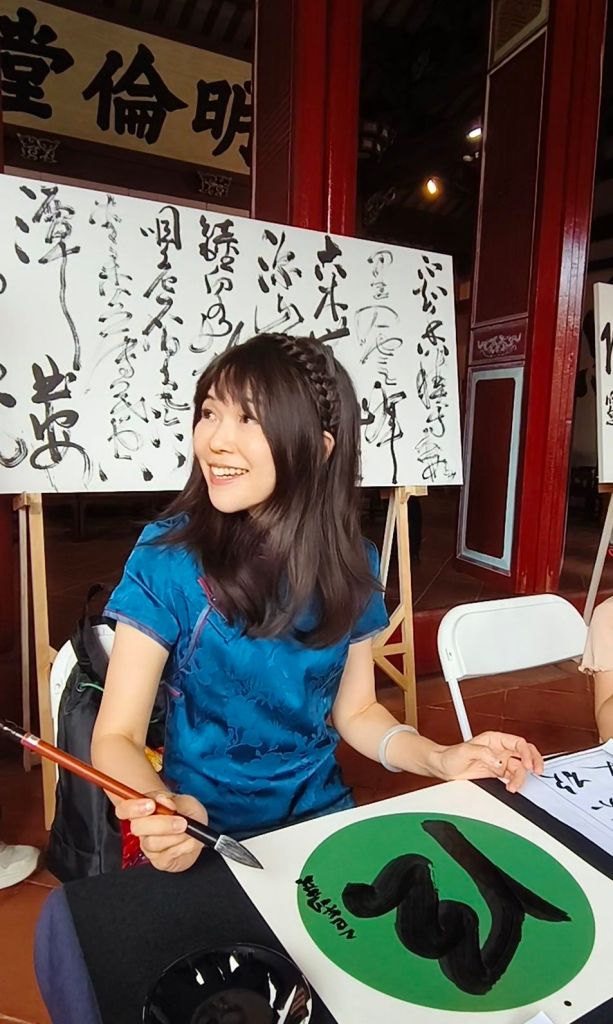
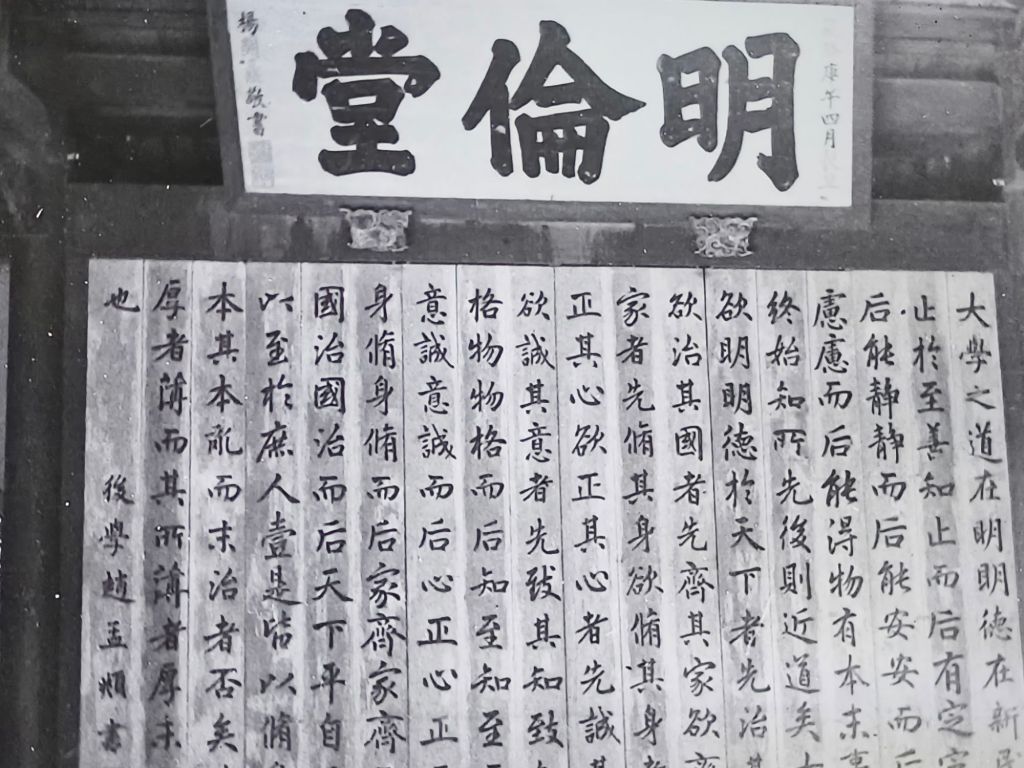
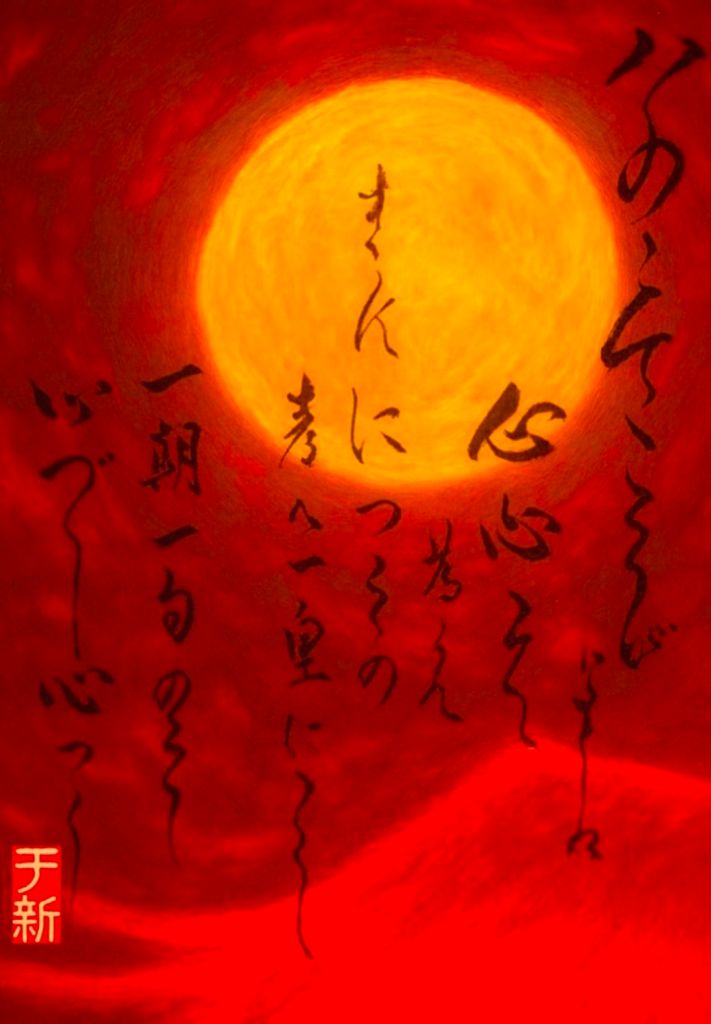
Because seal script carries the rhythm and stillness of history, each stroke arises from the restraint of breath and the calm of the heart. Oil painting is the language of light, where Western romance meets Eastern emptiness. When the pen and the brush converse upon the canvas, Cyn felt a wordless fusion- antiquity awakens within light, and modernity breathes quietly within ink.
This year’s moon is just such an existence: not the cool silver of autumn skies, but a molten red-gold, as if a heart were kindled in the frozen vastness of the universe.
Its radiance is not gentle — it almost melts the darkness itself, revealing, between light and flame, the ultimate edge of life. Such a moon is “a burning that has reached the depth of stillness,” like the opening line of Snow Country: “After passing through the long tunnel, you arrive at the land of snow.” And here — after traversing the long, crimson dusk — one arrives at the moon of the heart.
The poem inscribed upon the painting is a whisper of the soul:
“To take another’s joy as my own heart, To think and to care with sincerity, In each fleeting encounter, In the homeland of a hundred poems, A flower blooms — wholly from my heart.”
Such words are a soliloquy — reserved, quiet, yet suffused with human warmth. “To take another’s joy as my own heart” is an act of compassion, and a reverence for existence itself. Thus, the moon of Mid-Autumn is not merely a seasonal sign, but the most silent bridge between two hearts.
True beauty is never in outward splendor, but in a moment of eternity — a gaze before vanishing. The poem and the moon share this breath: like an unsent letter — knowing there may be no reply, yet written in the purest tone.
The Red Moon and Emptiness — The Ultimate “Kokorozukushi”
The whole painting is wrapped in deep crimson — the color of blood, and of love. In Buddhist thought, red symbolizes Great Compassion: to burn oneself, to illuminate others. Love in this light always carries a trace of extinction; the flame, seeking life within the moment of its dying.
“Kokorozukushi” — wholehearted devotion — is not worldly romance, but a compassion that transcends the self. Within that red moon, all burning hearts — for love, for vow, for the blossoming of a single flower — willingly surrender to the light.
“This moon does not belong to the heavens, but to the heart.” Its glow is not from without, but from within. It is the artist’s prayer in solitude, the quietest meditation of the Mid-Autumn night.
Between Flame and Silence
“The moon is not in the sky, but in the heart. When it rises, all things fall silent, and only the heart burns.”
Such is this Mid-Autumn moon — suspended in voiceless space, a fire of compassion, a moon born of the heart.
This light does not shine upon the world — it shines upon the soul.





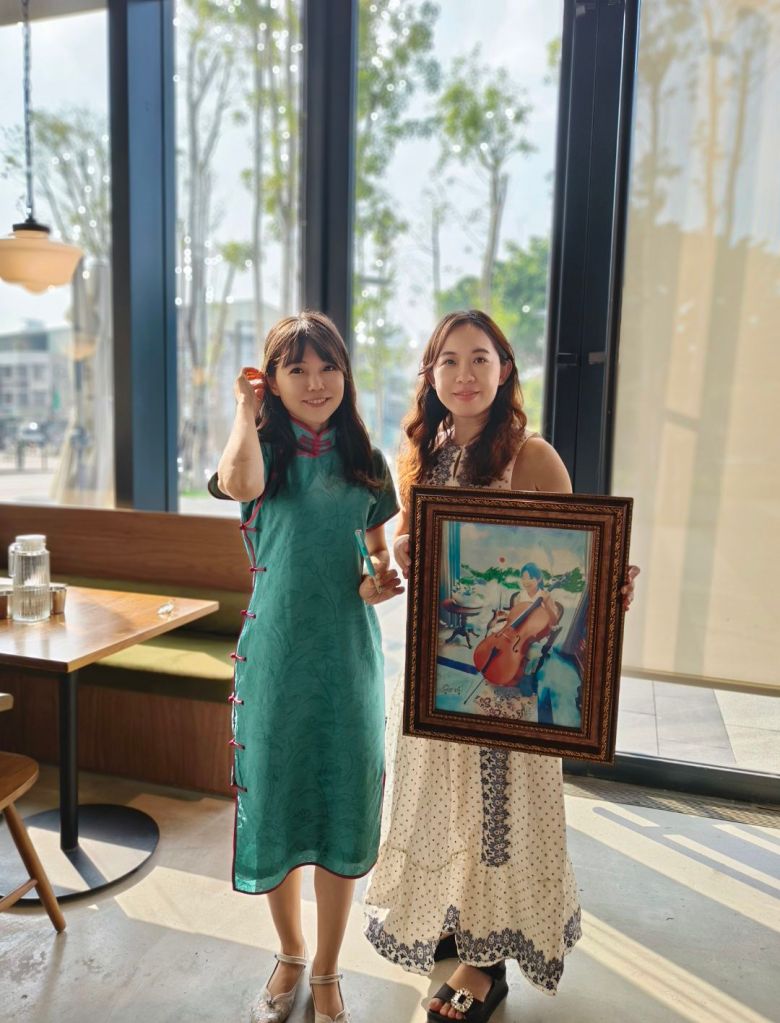

 藝術家劉于新