

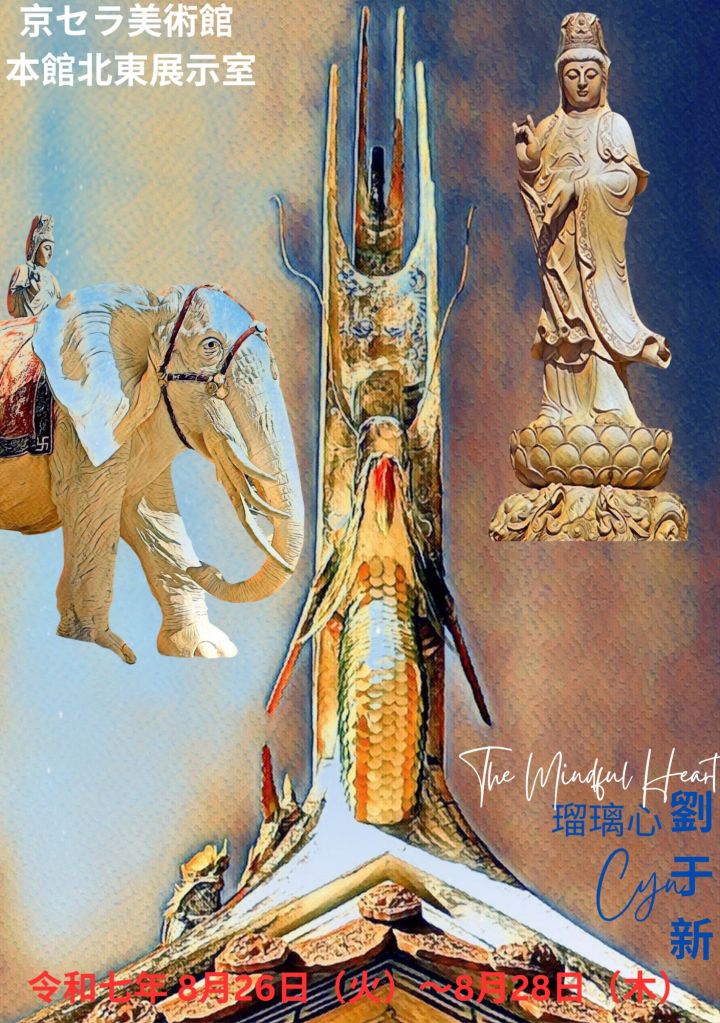
在這幅由 #劉于新 構築的畫面中,神獸、觀音與屋脊交織出一場靜默卻宏大的對話。
騎象的觀音,非凡而不遠,乘著白象緩緩而來,不是為了高坐萬象之上,而是為了俯身傾聽眾生心聲。那尊立於蓮座的觀音,是時間與慈悲雕出的「現在進行式」祂站著,等我們安住於自己。
正中那尾龍魚,背朝天、頭朝地,在天地之間穿梭的是覺知。祂在屋脊守望,祂不說話,卻在提醒:當我們抬頭看時,也正在被看見。
白象踏地,龍魚朝天,觀音入心-
這是一種正念的語法-
「在這裡,在此時,我們與萬物同息。」
畫者劉于新,在 #京瓷美術館 殿堂中,悄悄說心中的一句話:
「讓藝術,不只是看見,而是陪伴。」
我們不需參透這些符號,只需靜靜站著,呼吸。讓這些像靜止的神祇,在我們心裡,微微動了一下。
這,就是畫的慈悲。
這,就是「有情」的莊嚴。
這,就是 The Mindful Heart :
一顆安住於當下的心。
Guanyin and the Sacred Beasts
by Cyn
In this composition, sacred beasts, #Guanyin, and temple rooftops meet in silent dialogue.
The Guanyin riding a white elephant arrives not to rule from above, but to listen with compassion. The standing Guanyin on the lotus is the “present moment" carved by time and kindness waiting for us to return to ourselves.
At the center, the dragon-fish faces both sky and earth-a symbol of awareness watching from the rooftop. It speaks without words: when we look up, we are also being seen.
The elephant grounds us, the dragon rises, and Guanyin enters the heart.
This is a grammar of mindfulness:
“Here, now, we breathe with all beings.”
At the Kyoto City KYOCERA Museum of Art, the artist whispers gently:
“Art is not just for seeing—but for staying with us.”
You don’t need to decode the symbols. Just stand quietly, breathe, and feel the sacred stir, ever so gently, within.
こちらの作品では、神獣と観音、そして屋根の意匠が、静かで壮大な対話を織りなしています。
白象に乗る観音は、高みから支配するためではなく、衆生の声に耳を傾けるためにやって来ます。
龍魚は天と地をつなぎ、静かに私たちを見守ります。
白象は大地に立ち、龍魚は天を仰ぎ、観音は心へと入る――
「今ここで、すべての命と共に息をする」正念の瞬間。
京セラ美術館にて、劉于新はそっと語ります。
「芸術は見るだけでなく、ともに在るもの。」
 藝術家劉于新
發表留言